
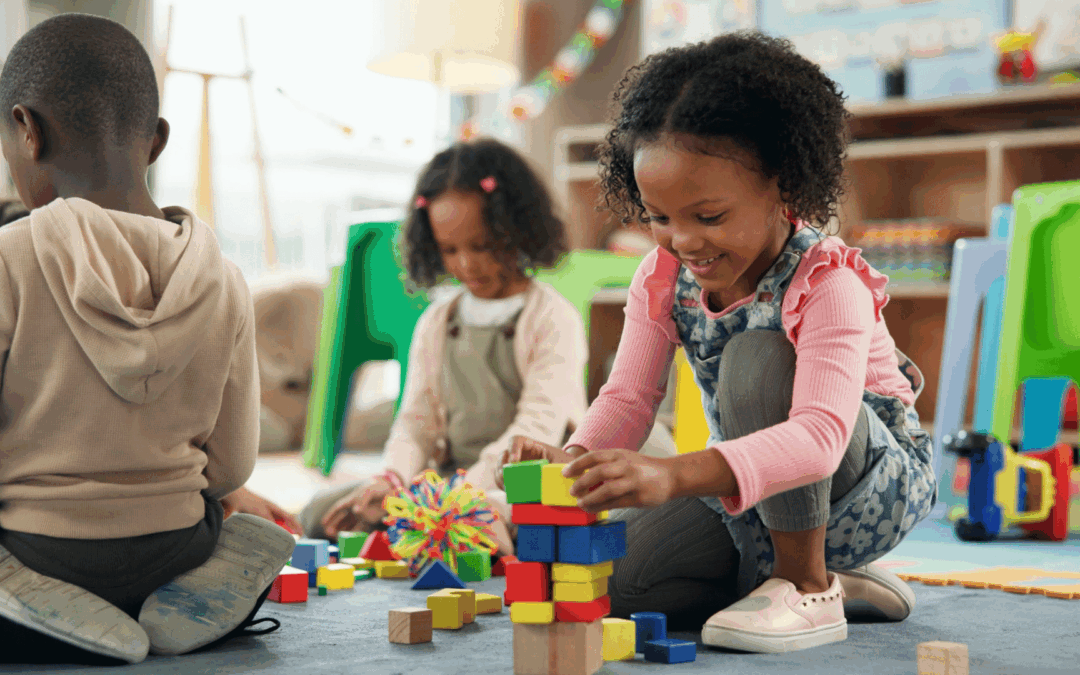
When parents hear the phrase “play-based learning,” it can sometimes sound like children are simply passing time. In reality, play-based learning is one of the most powerful ways young children learn. Through purposeful play, children build essential academic, social, and emotional skills that support early childhood development and prepare them for future learning.
In a play-based curriculum, play is not random or unstructured. It is intentional, guided, and deeply connected to how young children naturally explore the world. For preschool-aged children, play is serious work.
Why Play Is Essential for Learning
Young children learn best when they are actively engaged. Play allows children to experiment, make choices, and solve problems in a meaningful way. When children are playing, their brains are constantly working. They are planning, testing ideas, adjusting strategies, and learning from experience.
A strong play-based curriculum supports early childhood development by meeting children where they are developmentally. Instead of expecting children to sit still and memorize information, play-based learning encourages movement, curiosity, and hands-on exploration. This approach builds a solid foundation for academic success while supporting emotional well-being.
How Block Play Build Early Math and Thinking Skills
Block play is a great example of how play supports learning. When children build with blocks, they are engaging in early math concepts without even realizing it. They explore size, shape, balance, symmetry, and measurement. Stacking blocks introduces counting, comparing, and problem-solving skills.
Block play also supports early STEM for toddlers and preschoolers. Children experiment with cause and effect when towers falls and learn to adjust their designs to make structures more stable. These experiences build critical thinking skills that are essential for future learning in science, technology, engineering, and math.
Social and Emotional Skills Through Play
Play-based learning also plays a major role in social and emotional development. When children play together, they learn how to communicate, share materials, and take turns. Block play, pretend play, and group games naturally encourage cooperation and collaboration.
During play, children practice problem-solving in real time. They learn how to negotiate roles, manage frustration, and work through disagreements. These experiences help children develop empathy, patience, and emotional regulation. These skills are just as important as academic knowledge and are essential for success in school and life.
Building Confidence and Independence
Play allows children to take risks in a safe environment. When a child builds a structure that falls, they learn that mistakes are part of the learning process. They develop resilience and confidence by trying again.
A play-based curriculum encourages independence by allowing children to make choices and direct their own learning. This sense of ownership builds motivation and a love of learning. Children feel proud of their work because it is meaningful to them.
Supporting Whole-Child Development
Play-based learning supports the whole child. It strengthens cognitive skills, supporting physical development through movement, and nurtures social and emotional growth. For parents exploring early education options, understanding the value of play is important when choosing a preschool.
Many families searching for preschool is drawn to environments that balance learning with joy. A play-based curriculum ensures children learn essential skills while experiencing the wonders and excitement of childhood.
Preparing Children for the Future
Play-based learning prepares children for kindergarten and beyond by building strong foundations. Children develop focus, problem-solving skills, collaboration, and confidence. These skills support long-term success in both academic and social settings.
What may look like “just playing” is actually meaningful learning in action. Through intentional play, children develop the skills they need to thrive.
For parents seeking a preschool experience that values both learning and childhood, a play-based approach offers a strong and developmentally appropriate foundation.