
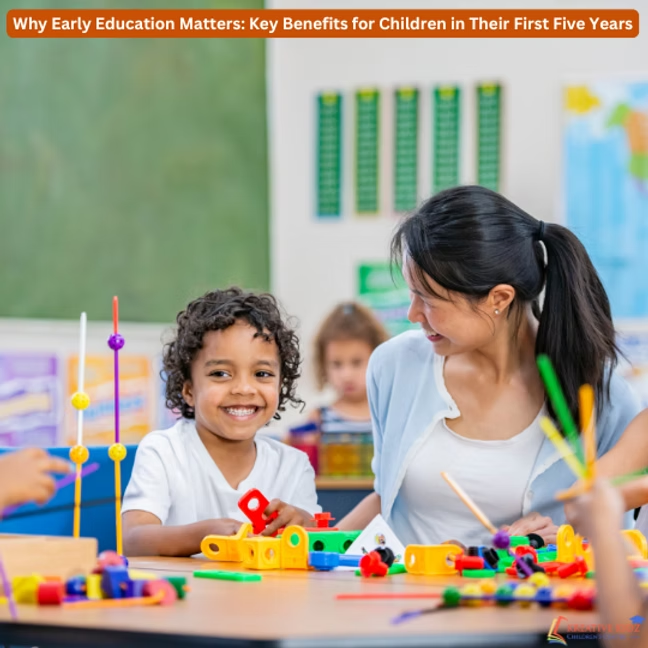
The first five years of a child´s life is a crucial period of brain development, shaping their future learning, behavior, and success. During this stage, preschool provides structured learning experiences that help children explore, experiment, and develop essential social, emotional, and cognitive skills. Investing in early education builds a strong foundation, giving children the confidence, curiosity, and problem-solving abilities they need to thrive in school and beyond.
1. Brain Development in the Early Years
From birth to age five, a child´s brain forms over one million neural connections per second. These early experiences- whether at home, in preschool, or in a high-quality daycare- play a critical role in shaping a child´s ability to think, communicate and interact with others. Research shows that children who receive quality preschool education develop stronger language and literacy skills, better reasoning and problem-solving abilities, and higher levels of emotional intelligence and self-regulation.
These skills give children a head start before they even enter formal schooling, setting them up for lifelong success.
2. The Power of Play-Based Learning in Preschool
Play is one of the most effective ways young children learn. In preschool, play-based activities such as storytelling, hands-on science experiments, and creative arts help children develop cognitive and motor skills, early literacy and numeracy skills, and communication and social skills.
Structured play also encourages curiosity and a love for learning, making education enjoyable and engaging. High-quality preschool programs integrate guided play to nurture critical thinking and creativity in young learners.
3. Social and Emotional Development in Early Childhood
Enrolling children in preschool provides valuable opportunities for social interaction, teaching them how to share, cooperate and take turns, recognize and express emotions, and communicate effectively with peers and adults.
A nurturing preschool fosters a sense of security and belonging, which is essential for a child´s emotional well-being. Developing these social skills at a young age helps children navigate relationships and challenges with confidence.